How a trip to Montréal started Easy French News
Easy French News started a year ago, in September 2025. The idea came earlier, on a trip to Montréal.
The French I had and the French around me
In Montréal, French isn't a subject. It's the language of the street, the metro, the shop counter and the front page. I had studied French, and I could get through a menu, a ticket machine and a polite exchange at a counter. Then I picked up the news, and the gap opened up.
I didn't lack words so much as stamina and structure. A news paragraph in French is often a single long sentence: a main clause, two subordinate clauses, a date, a percentage and a quotation, all before the full stop. I could translate it word by word, but by the end I had lost the beginning. Learner material had the opposite problem. It was short and clear, but it wasn't about anything happening in the world that week.
So I wanted something in between: the real story from today's news, in French I could actually finish, with the original one step away for when I was ready.
One story, four levels
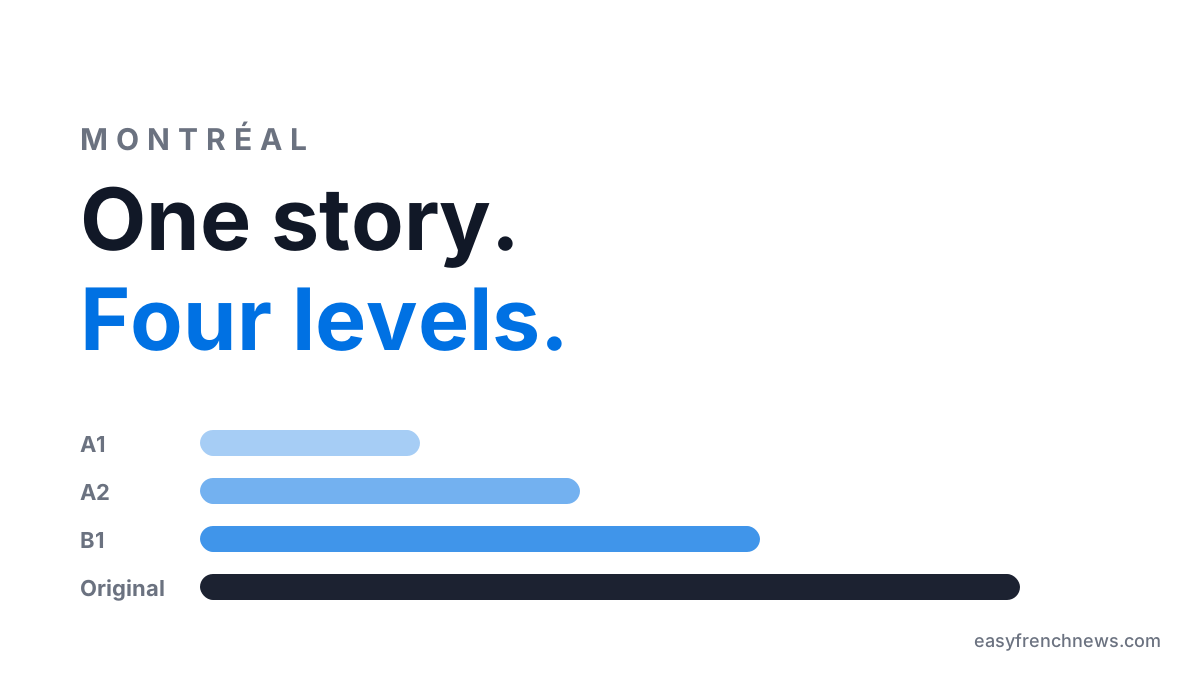
That became the core of the site and it hasn't changed. Every article exists four times:
- A1, a short brief of about 300 words in short sentences and the most common words;
- A2, a longer brief of about 500 words with a little more context;
- B1, the whole story paragraph by paragraph, in simpler sentences;
- the original, the full French text.
The point isn't to stay at A1. The point is to read the same facts at a level you can manage today, then open the next level up and recognise what you've just read. Recognising a sentence you already understand is where the learning happens.
Around that core came the small tools I wanted for myself: tap a word to see its meaning, save it, review it later, and listen to the text read aloud. They're described on the About page, along with how the levels are made.
What one year taught me
1. Learners want the real thing, made reachable
Readers move between levels far more than I expected: they read a brief, then open the B1 or the original of the same story. Nobody wants to stay on easy texts forever. They want to read what French speakers are reading. The level is a ladder, not a destination. That's why every article links to the next level up and to the original source.
2. Length matters as much as difficulty
Early on, the A1 versions simplified every sentence but kept every paragraph, and some ran past 700 words. A beginner text that long becomes an endurance test. Graded readers put A1 at 150–300 words, so the A1 and A2 versions became short, structured briefs. I wrote about what actually changes between the levels in a separate post with the numbers.
3. Sources have to be reusable
Rewriting an article at three levels is an adaptation, and not every publisher's licence allows that. Today most stories come from Agencia SINC, Spain's public science news agency, whose articles are published under CC BY 4.0. We translate them into French and credit and link every one. The weekly Reports for Plus readers are adapted from Statistics Canada's « Le Quotidien » under its open licence.
4. Many readers are preparing for Canada
A year ago I didn't expect this. Many of our readers are preparing TEF Canada or TCF Canada for Express Entry, Québec or citizenship, which brings the site back to where the idea started. So the levels now carry their NCLC band, the scale Canadian immigration uses. There's also a free reading placement, and the French for Canada page explains how to use the site for the exam.
What hasn't worked (yet)
Honesty is part of the deal. Some features I was sure about went unused. A full-screen pop-up asking people to turn off their ad blocker irritated far more readers than it convinced, so it's now a small card. And many articles still struggle to show up in search. That's one reason this blog exists: to write the long, useful pieces that a daily news brief can't be.
What comes next
- More reading every week. A new story every day, at every level.
- Better exam practice. Timed reading, full-length reading papers and graded writing for TEF and TCF Canada keep improving with feedback from people who sit the exams.
- This blog, in English and in French: methods, measurements from our own archive, and exam advice. A new post every few days.
If you've been reading for a while, thank you. If you're new, start with the levels and pick the one where you can finish the article without a dictionary on every line. That's the right one.
And if you find a mistake, or something you wish the site did, write to me. It comes straight to me.
— Nikita